While AMD and NVIDIA are consistently revising their GPU architectures, for the most part the changes they make are just that: revisions. It’s only once in a great while that a GPU architecture is thrown out entirely, which makes the arrival of a new architecture a monumental occasion in the GPU industry. The last time we saw this happen was in 2006/2007, when unified shaders and DirectX 10 lead to AMD and NVIDIA developing brand new architectures for their GPUs. Since then there have been some important revisions such as AMD’s VLIW4 architecture and NVIDIA’s Fermi architecture, but so far nothing has quite compared to 2006/2007, until now.
Showing posts with label GPU. Show all posts
Thursday, December 22, 2011
Thursday, December 15, 2011
Introducing AMD’s Radeon 7000M and NVIDIA’s GeForce 600M Mobile GPUs
Introducing AMD’s Radeon Mobility 7400M, 7500M, and 7600M
Traditionally AMD and NVIDIA have launched their new series of graphics products at the high-end and worked their way down. This means launching products like Cypress (Radeon HD 5800 series) and GF100 (GeForce 470/480) first, and following it up with smaller products like Redwood (Radeon HD 5600 series) and GF106 (GeForce 450) later. This owes to the fact that high-end GPUs are the flag bearers of a generation, with new architectures being built on these large chips first before lesser products are derived from them. As a consequence of building the biggest chips first, new architectures have always launched on the desktop first and have come to the mobile space later once the lesser derivatives were ready.
NVIDIA Releases CUDA 4.1
Since starting their GPU Technology Conference in 2010, NVIDIA has expanded into several events so that they can hold events in Europe and Asia. The next flagship GTC will be in San Jose in May, but NVIDIA’s #2 conference, GTC Asia, is occurring this week in Beijing. As with GTC America, GTC Asia serves several purposes for the company: a research symposium, a developer training program, and of course a platform for NVIDIA to announce new GPU computing products and initiatives.
Saturday, November 19, 2011
ATI Radeon HD 6990 Review
Aaah, it's Monday morning, 9AM - with a cup of coffee in my right hand staring at the monitor, looking outside through the office window where there is a clear blue sky and the sun is shining. Sitting 3 meters away from me is "Diablo" our primary mean graphics benchmarking machine, sitting in it, is this red little devil armed by two GPUs and a lot of features. Heck yeah, last week the Radeon HD 6990 arrived here in the office, and is sitting like two buns in an oven waiting to be consumed. It's gonna be a good day.
Friday, November 18, 2011
ARM's Mali-T658 GPU in 2013, Up to 10x Faster than Mali-400
ARM's licensed CPU cores dominate the mobile space. This year the core of choice for high-end smartphones and tablets is ARM's Cortex A9 and late next year it'll be the Cortex A15. ARM also offers GPU cores to its partners, although we've seen far more limited adoption compared to its CPU offerings. The limited adoption has nothing to do with a lack of performance though as we found in our review of Samsung's Galaxy S 2. ARM's Mali-400 MP4 is the fastest GPU we've tested on Android and second to only Imagination Technologies' PowerVR SGX 543MP2 across all of our mobile data.
Friday, October 28, 2011
ATI Radeon HD 6970 2GB Review
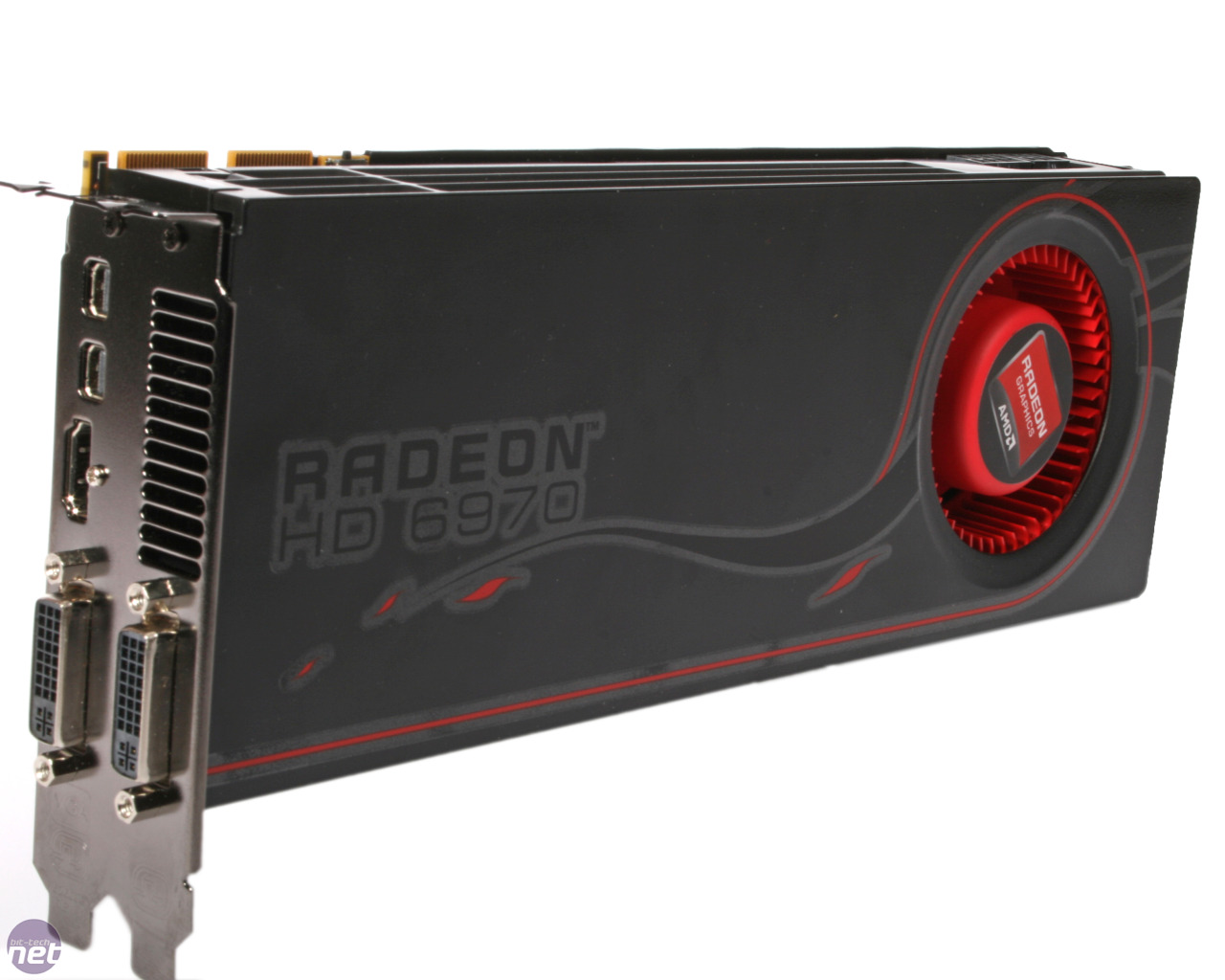
The previous Radeon HD 6800-series got our hopes up in two ways – firstly it sounded like it’d be more than a mid-range GPU that went toe-to-toe with Nvidia’s GeForce GTX 460 cards, and secondly it wasn’t all that new. But while the Barts GPU of the HD 6800 looked more like an overclocked HD 5830 with a tweaked front-end unit, the Cayman GPU of the Radeon HD 6900 is a completely new design throughout.
Before we plunge into the details of the new GPU, let’s clear up the naming. We’re sticking with calling these cards ATI Radeons because that’s what most people know them as, and AMD has said that it’s fine with it partners gradually transitioning from ATI to AMD Graphics until 2011. We still plan to switch when AMD’s Fusion APU is launched in early 2011, as it’ll be silly to talk about a single piece of silicon that has both AMD and ATI technology.
NVIDIA GTX 590 Preview
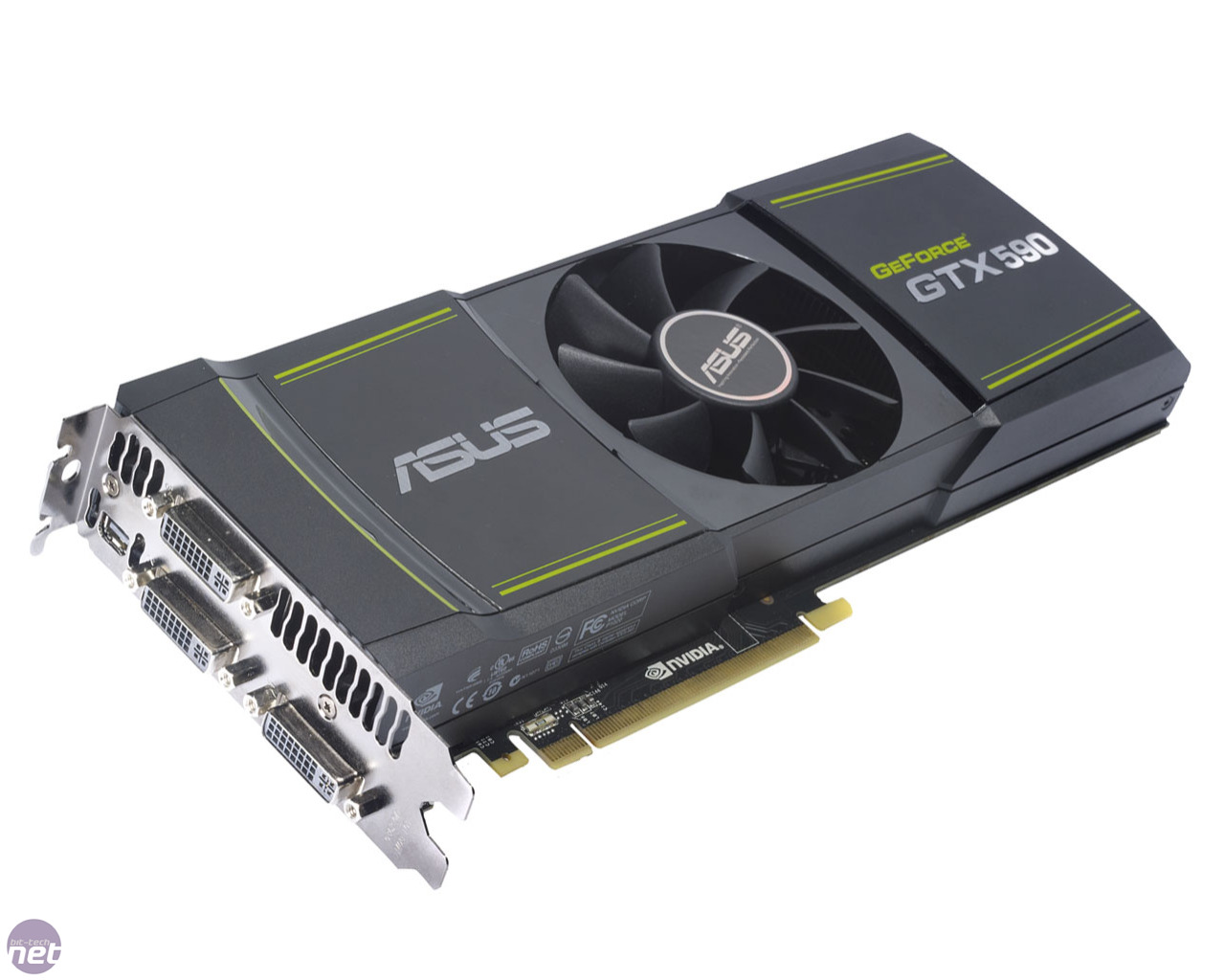
Despite a tradition of releasing range topping dual-GPU graphics cards since 2006, it’s been over two years since we’ve seen a new multi-GPU graphics setup from Nvidia. Back then it was the GeForce GTX 295 1,792MB, tearing up the benchmarks with its dual GT200b GPUs and going head-to-head with the Radeon HD 4870 X2 2GB.
Since then, though, Nvidia’s fortunes have dipped and risen like the metaphorical rollercoaster. The first generation of Fermi GPUs, based on the GF100 architecture, proved much too hot, power hungry and noisy even on single-GPU cards. This left the dual-GPU Radeon HD 5970 2GB uncontested as the fastest single graphics card for some time.
However, with the significant improvements afforded by the use of low-leakage transistors for non-performance critical components, the revised Fermi GPUs of the GTX 500-series have offered a marked improvement. With their reduced thermal output, it was only a matter of time before we saw Nvidia returning with a range-topping dual-GPU card again. With AMD having played its top-end hand with the Radeon HD 6990 4GB, it's now Team Green’s turn with the GeForce GTX 590 3GB.
Tuesday, October 25, 2011
Learn About SLI Technology
Back in 1998, the company 3DFX first introduced us to the SLI term with their Scan-Line Interleave technology used in their Voodoo2 range of graphics cards. NVIDIA then came along and bought 3DFX, and came up with a new idea of using the PCI-Express bus to increase 3D graphics performance. They named this new technology Scalable Link Interface (SLI).
What is Optimus
When you're checking out a laptop's specifications, you may notice that some NVIDIA graphics cards feature Optimus technology. But what exactly is Optimus? And is it an option worth looking for in a notebook? Find out more below in this detailed explanation of Optimus technology.
What is Optimus?
Optimus is a technology by NVIDIA that automatically adjusts graphics based on how you're using the device to better conserve battery power on a laptop computer. Sometimes this is referred to as a hybrid graphics system.
Thursday, October 20, 2011
Nvidia Announces Tegra "Grey" SoC with Built-in 3G, 4G Communication Capabilities
Nvidia Corp. has been addressing different kind of devices with its highly-integrated Tegra system-on-chips, but while the company has managed to win tens of designs, those devices were not truly mass products. Up to recently, Nvidia could not integrate communication features, but with the takeover of Icera, Tegra with 3G/4G modem was inevitable. It is coming in 2012.
"Wayne is our next-generation [Tegra] processor and along with that we will have a processor called 'Grey', this is where we are going to integrate Tegra processor with Icera modem into a 3G/4G little tiny chip to address the vast majority of the smartphone market," said Jen-Hsun Huang, chief executive officer of Nvidia, at Citi Global Technology Conference.
Thursday, October 13, 2011
AMD Radeon HD 6870 CrossFire with 5x1 Eyefinity
Way back in September of ’09, AMD launched the Radeon HD 5800 series, and along with it officially unveiled its Eyefinity multi-display technology, which now pervades all Radeon HD 5000 and 6000 series cards in one form or another. Leading up to the release of the 5800 series, AMD tried to keep Eyefinity a close guarded secret, so its arrival was a pleasant surprise for most consumers and a not so pleasant one for rival NVIDIA perhaps. Dual and multi-screen gaming wasn’t new per say, just ask die-hard Flight Simulator fans who have been doing it for years. However, AMD’s implementation was much more elegant than any of hacks or other solutions available in the past. And on higher-end cards, it allowed for easy integration of up to six monitors, which was unheard of at the time.
Wednesday, October 12, 2011
New NVIDIA Tesla GPU Smashes World Record in Scientific Computation
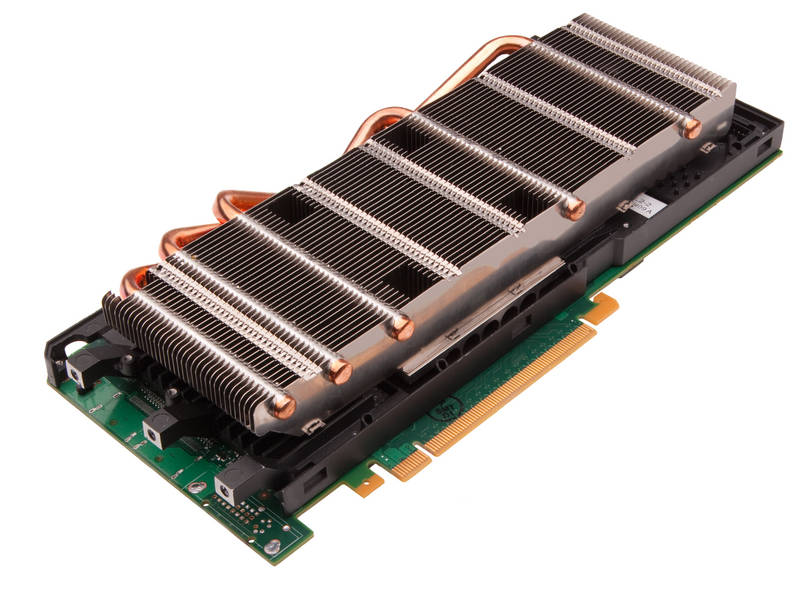
SANTA CLARA, CA -- (Marketwire) -- 05/17/2011 -- NVIDIA today unveiled the Tesla™ M2090 GPU, the world's fastest parallel processor for high performance computing. In addition, the Tesla M2090 GPU achieved the fastest-ever performance in a key measure of scientific computation.
Equipped with 512 CUDA® parallel processing cores, the Tesla M2090 GPU delivers 665 gigaflops of peak double-precision performance, enabling application acceleration by up to 10x compared to using a CPU alone.
What is nVidia PhysX?
Generally speaking PhysX is a realtime middleware physics engine SDK. It refers to the card PPU (physics processing unit) which can accelerate graphic processing, where PhysX feature is enabled. It is used the most to enhance graphic environment in computer games, PhysX was designed strictly to improve the graphic performance. The physX was released some time ago, it was used then by Graphic engineers and designers to produce professional physics simulations and to make 3D environment used in games or movies. The fact was that this technology was too expensive for a regular gamers. Graphics processes supporting hardware acceleration by PhysX can be accelerated by PhysX PPU or a CUDA-enabled GeForce GPU. CUDA is a name of PhysX developed engine by nVidia. When graphic applications such as computer games using physics calculations from the CPU, allowing it to perform other objectives instead - it is potentially resulting with a smoother and faster graphic processing. Middleware physics engines gives another feature to game designers. It allows to avoid writing their own code to handle the complex physics interactions possible in modern games, because PhysX has got a ready to use physical algorithms.
Tuesday, October 11, 2011
NVIDIA & Its Troubled GeForce 400 Series
Today I wanted to write a little 'opinionated' editorial. Typically we do not address rumors and gossip. But an accumulation of things that have been going on over at camp NVIDIA and the Internet leading us to believe things are not as they should be. The rumors are creating a rather negative stigma for NVIDIA.
Last week most of NVIDIA's partner got sampled with the first GeForce 400 series graphics cards, and of course somebody somewhere leaked information towards a person which we'll just call 'Mr C', this friendly little fellah has an unnatural and seriously unhealthy attitude towards NVIDIA, I'm seriously afraid he's gonna stroke out some day. Take a chill pill man, it's just hardware.
AMD ATI Radeon HD 5870: Unquestionably Number One
Over the past couple of weeks, we've been completely preoccupied trying to come up with a catchy and informative introduction for this article. We thought maybe it would be fun to play off of AMD's tree-laden GPU codenames to come up with an interesting segue into the Radeon HD 5800 series' power efficiency. But we came up short. Then we thought we could use an image of the Radeon HD 5870's cooler and draw a parallel to the awesomeness that was the original Bat Mobile, but a couple of folks from AMD snagged that idea. Even being briefed on the technology we're about to show you on the very same aircraft carrier that scooped up the Apollo 11 astronauts didn't cure the writer's block.
Subscribe to:
Posts (Atom)